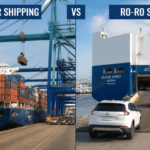
Container Shipping vs. Ro-Ro: What’s the Difference?
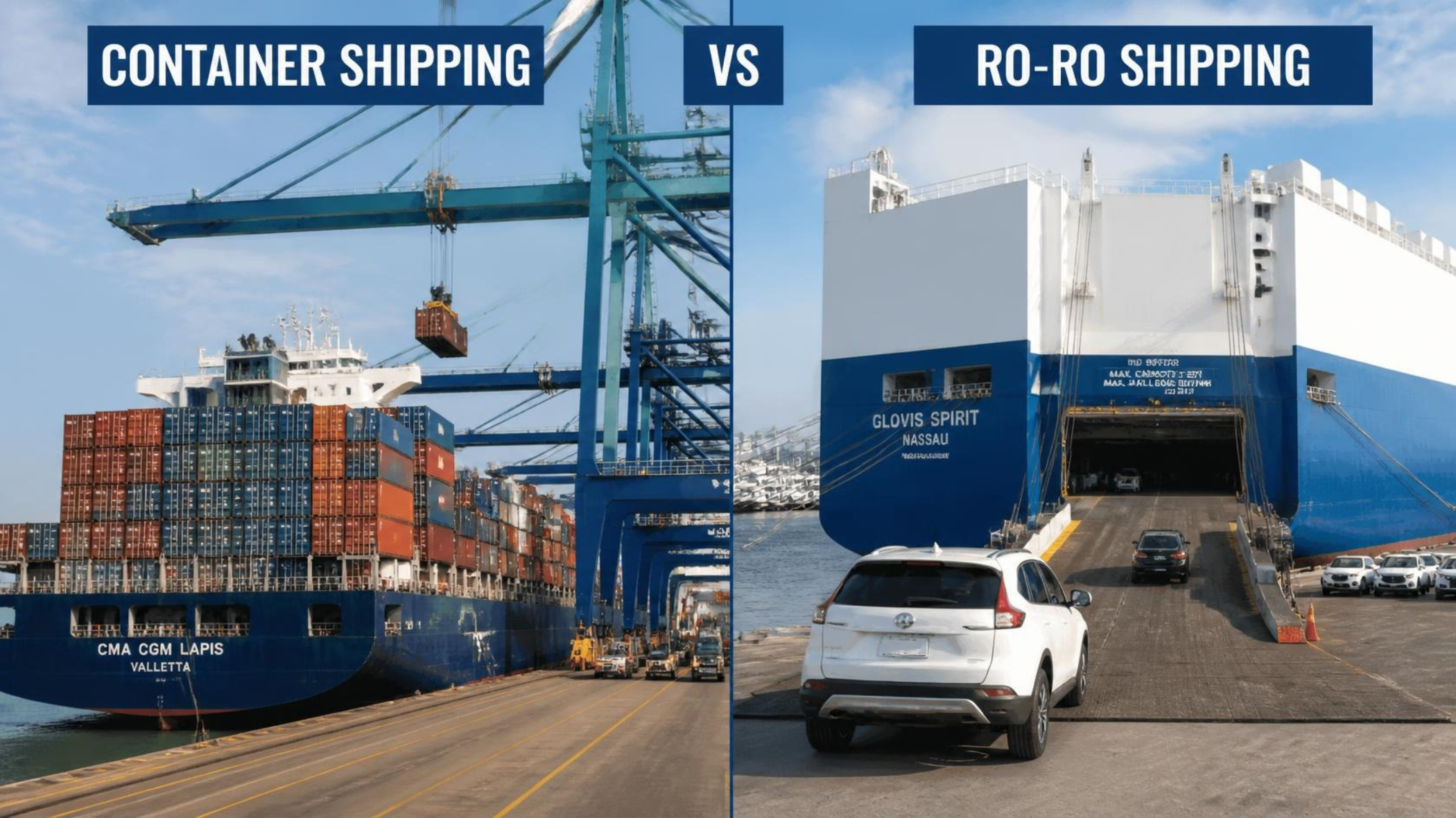
When shipping vehicles or machinery internationally, customers often compare container shipping and Ro-Ro (Roll-on/Roll-off) service. Both methods offer reliable transportation, but each option works differently. Therefore, the right choice depends on the type of cargo, its dimensions, destination, and shipping requirements.
Container Shipping
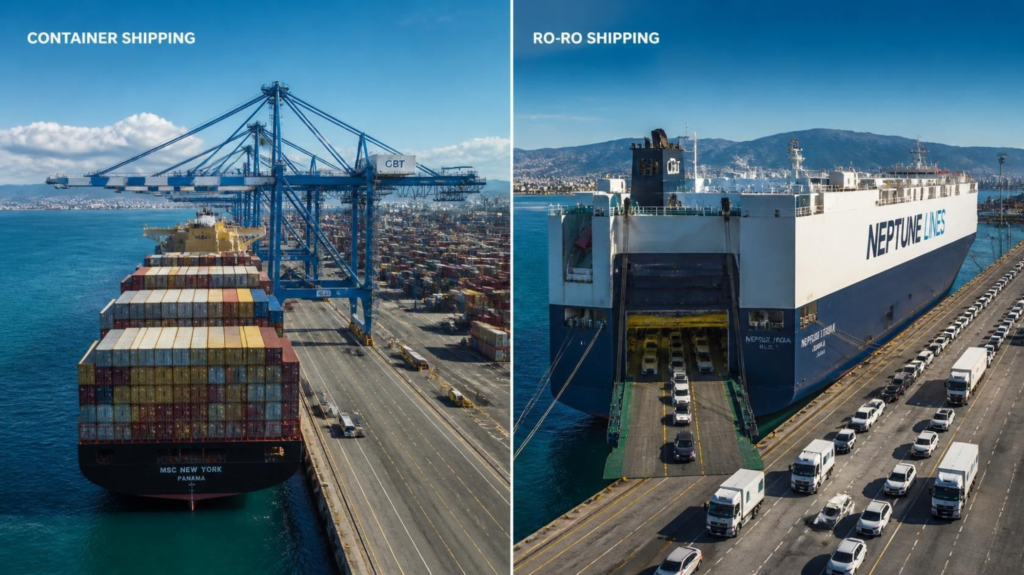
Container shipping provides a secure and flexible option for transporting vehicles, machinery, equipment, and other cargo. First, the loading team places the cargo inside a standard 20-foot or 40-foot container. The team then secures the cargo properly to prevent movement during ocean transportation.
One major advantage of container shipping is additional protection. The container shields the cargo from weather conditions and limits outside access during transit. In addition, customers can often ship certain spare parts, tools, or personal items inside the same container, depending on carrier and customs regulations.
However, not every vehicle or machine fits inside a standard container. Oversized cargo may require a flat rack, open-top container, or another specialized shipping method. Therefore, accurate dimensions are essential before booking.
Ro-Ro Shipping
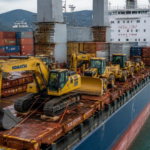
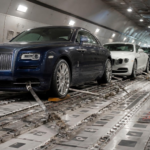
Ro-Ro shipping offers a practical solution for vehicles and machinery that can roll onto and off the vessel. For example, customers commonly use this method for cars, trucks, buses, construction equipment, and other wheeled machinery.
During loading, port personnel drive or tow the vehicle directly onto the Ro-Ro vessel. Next, the crew secures it in a designated cargo area for the ocean journey. At the destination port, the team drives or tows the vehicle off the vessel.
Ro-Ro service can simplify the loading process because it does not require a standard shipping container. In addition, it can work well for larger vehicles that exceed container dimensions. However, carriers usually restrict personal belongings and loose cargo inside vehicles.
Which Option Should You Choose?
The best shipping method depends on your cargo and destination. For example, container shipping may offer more protection and flexibility for smaller vehicles, machinery, and additional cargo. Ro-Ro shipping, on the other hand, may provide a practical solution for operational vehicles and larger wheeled equipment.
Before booking, provide accurate cargo dimensions, weight, pickup location, and destination. Also, tell your freight forwarder whether the vehicle or equipment can move under its own power.
Finally, an experienced freight forwarder can compare available options and help you choose the most suitable shipping method. Careful planning can reduce delays, control costs, and make the international shipping process more efficient.