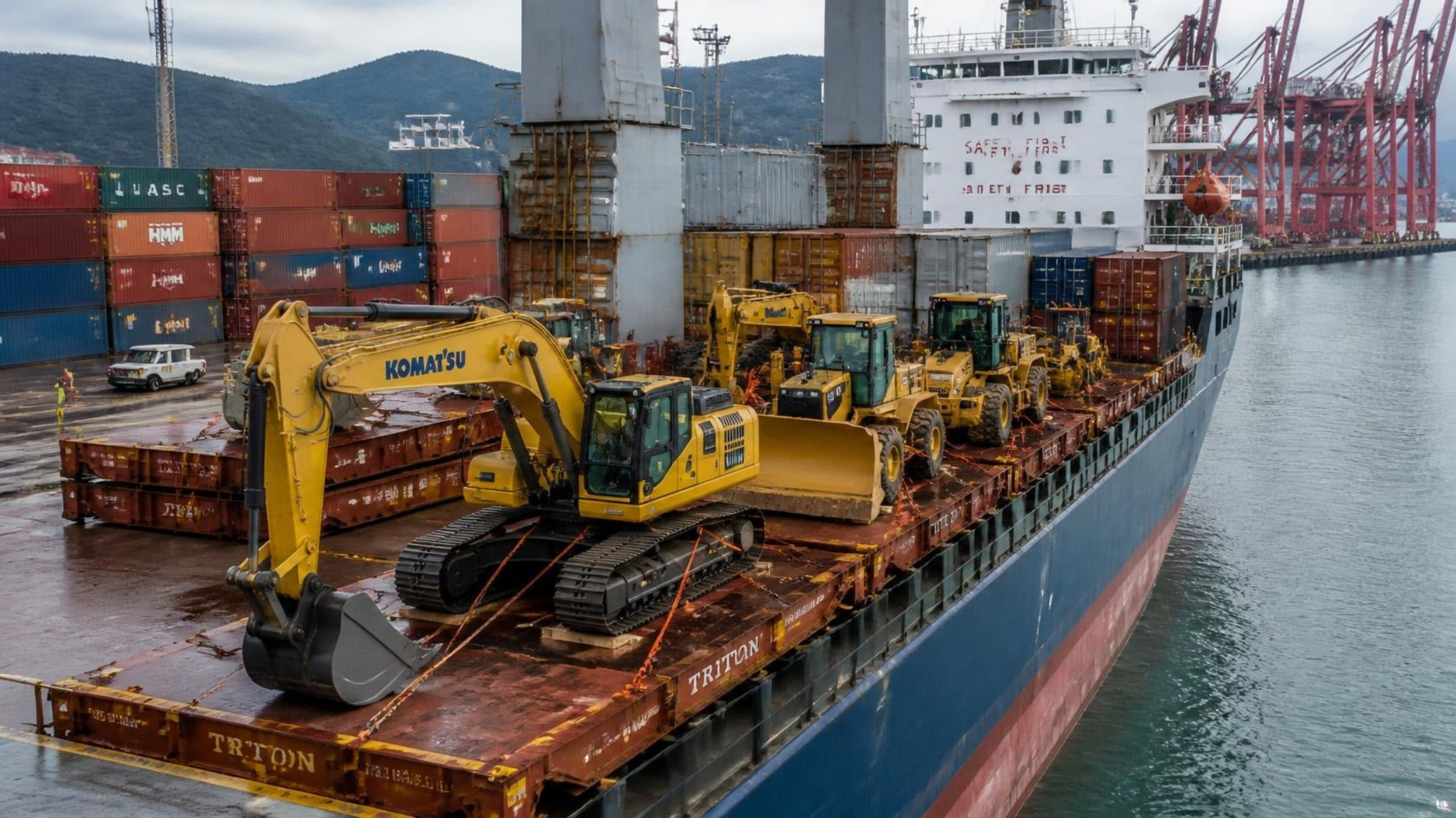
Heavy Equipment Shipments: International Transportation Guide
International heavy equipment shipments require specialized planning because construction machinery, agricultural equipment, industrial machines, excavators, loaders, cranes, and other large equipment often exceed standard shipping dimensions. The transportation method depends on the size, weight, operating condition, origin, destination, and available port services.
Provide Accurate Equipment Specifications
Before requesting a shipping quote, measure the equipment carefully. Provide the overall length, width, height, and weight. Include buckets, blades, booms, counterweights, tires, attachments, or other components unless they will be removed before transportation.
Photographs are also extremely useful when planning specialized equipment shipments. Incorrect measurements can result in unsuitable transportation equipment, revised freight rates, or delays at the terminal.
Reduce Dimensions When Practical
Some heavy equipment can be partially disassembled to reduce its transportation dimensions. Buckets, blades, mirrors, exhaust stacks, booms, and removable attachments may sometimes be transported separately.
Reducing the overall dimensions can potentially provide additional shipping options. However, disassembly should only be performed when appropriate and safe.
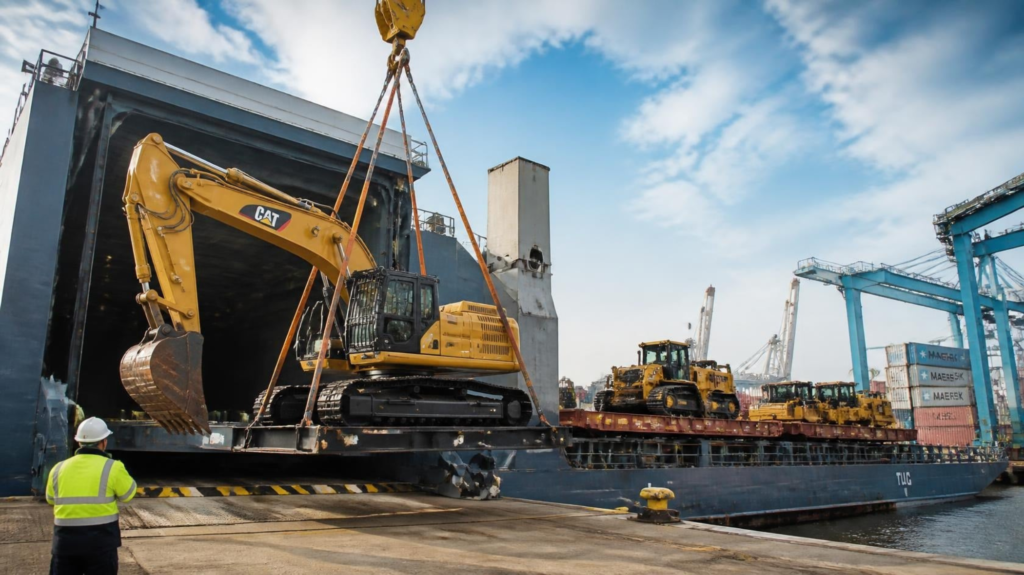
Choose the Correct Shipping Method
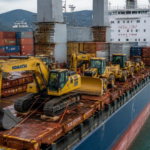
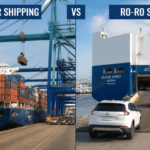
Operational wheeled or tracked equipment may sometimes be transported using Ro-Ro service.
Other machinery may require flat-rack containers, open-top containers, specialized trailers, breakbulk vessels, or other heavy-lift transportation. The most suitable method depends on the equipment and route.
Prepare Equipment for Transportation
Clean heavy machinery before shipment and remove loose dirt or debris. Secure movable components and inspect the equipment for leaks.
Carrier requirements regarding fuel, batteries, hydraulic systems, and other equipment should be confirmed before transportation. Take photographs to document the machinery’s condition.
Coordinate Loading and Delivery
Heavy equipment shipments may require cranes, forklifts, specialized trailers, escorts, permits, or professional loading crews. The destination also needs to be evaluated to ensure the necessary unloading equipment is available.
Provide complete equipment specifications, origin, destination, photographs, and preferred schedule when requesting a quote. Detailed planning helps reduce delays and ensures that the appropriate transportation equipment is arranged before the machinery begins its journey.